
Review · BIOLUMINESCENT BAY KAYAKING
Bioluminescent Bay Chiliboats Waterbike Tour in La Parguera
The water lights up at every stroke. I like the stable catamaran-style Chiliboats and the calm, eco-minded approach to La Parguera’s glowing bay. I also like that you can enjoy the water without balancing in a kayak. The main catch is simple: the glow is natural, so it may be faint on some nights, and the ride from San Juan takes about two hours.
This 90-minute nighttime outing costs $79 per person and returns to Punta Papayo in La Parguera. Guides such as Mary, Waldie, and Mariemma have earned praise for clear safety help and science explanations. Plan to arrive 30 minutes early, bring water shoes, and expect your legs to work for roughly 25 minutes at a time.
In This Review
- Six things to know before you pedal
- Why La Parguera’s glow is worth the drive
- Arriving at Punta Papayo in La Parguera
- Getting used to the Chiliboat
- The ride to Bahia Fosforescente
- Watching the water glow
- How much bioluminescence should you expect?
- Guide service and the eco-friendly approach
- Who will enjoy this most?
- Is $79 a fair price?
- What to pack and how to plan the night
- Should you book the La Parguera Chiliboat tour?
- FAQ
- How long does the Chiliboats bioluminescent bay tour last?
- Where does the tour meet?
- How early should I arrive?
- Is the bioluminescence guaranteed to be bright?
- What are the height and weight limits?
- Can I swim in the bay?
Six things to know before you pedal
- Chiliboats are double waterbikes: Their wide, catamaran-style design feels steadier than a narrow kayak.
- Dark nights give you the best chance: The glow is usually strongest close to the New Moon.
- San Juan is not around the corner: Allow about two hours each way by car.
- Pedaling is easy but not passive: You need moderate fitness and should expect repeated stretches of pedaling.
- There are no restrooms at Punta Papayo: Use facilities before arrival.
- The tour protects the bay: Swimming, jumping in, alcohol, smoking, and drug use are not allowed.
Why La Parguera’s glow is worth the drive
La Parguera, in the Lajas area of southwestern Puerto Rico, offers one of the island’s three permanent bioluminescent bays. The setting is quiet at night, and the darkness lets you focus on small flashes of blue-green light in the water rather than on a large artificial display.
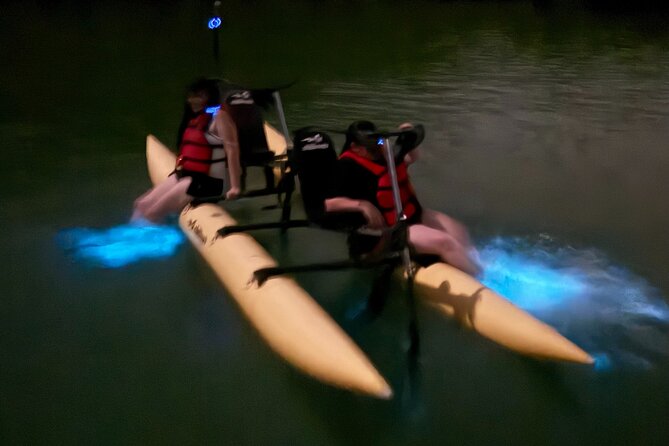
The glow comes from dinoflagellates, tiny organisms that produce light when the water around them is disturbed. Move your feet, stir the surface, or make a small splash, and points of light appear. The effect is more delicate than the bright blue water shown in many promotional photos, but under good conditions it can feel wonderfully strange.
I appreciate that this is a natural event, not a show with a guaranteed brightness level. Rain, sediment, tides, sunlight, cloud cover, and the moon all affect what you see. One night can be excellent, while another can feel modest. That uncertainty is part of the bargain, so book this for the experience of being on the bay at night, not for a guaranteed light display.
A dark sky helps in two ways. It makes the water easier to see, and it lets you notice stars and sometimes satellites overhead. For the strongest odds, choose a date near the New Moon and avoid a bright full moon.
More bio bay kayaking trips:
- Two-in-One Day Trip: El Yunque and Bio Bay Tour with Transport
★ 5.0 · 1,216 reviews - Hike El Yunque Rainforest and Kayak Bio Bay Combo Tour
★ 4.5 · 1,010 reviews - La Parguera Bio Bay Boat Ride and Swimming w/ San Juan Transport
★ 4.0 · 534 reviews
Arriving at Punta Papayo in La Parguera
The meeting point is Caribbean Chiliboats Parguera at Punta Papayo, 1 9 Interior Final, La Parguera, Lajas 00667. This is not in central San Juan, despite San Juan being used as the main reference point for the tour. The drive from San Juan takes about two hours, while Aguadilla is roughly an hour and a half away.
The meeting area has been described as being at the end of a street by the water, with parking available on site. Still, I would not cut arrival close. You need time to park, show the identification and credit card used for the booking, complete the safety process, and get ready to board.
Arriving at least 30 minutes early matters here. A late arrival can be treated as a no-show, with no refund, even if the boat has not yet gone far. The person who made the booking should make sure everyone in the group knows the departure time and identification requirement.
There are no restrooms at the natural reserve meeting point. That is an easy detail to overlook and an annoying one to discover too late. Use a restroom before you reach Punta Papayo.
Getting used to the Chiliboat
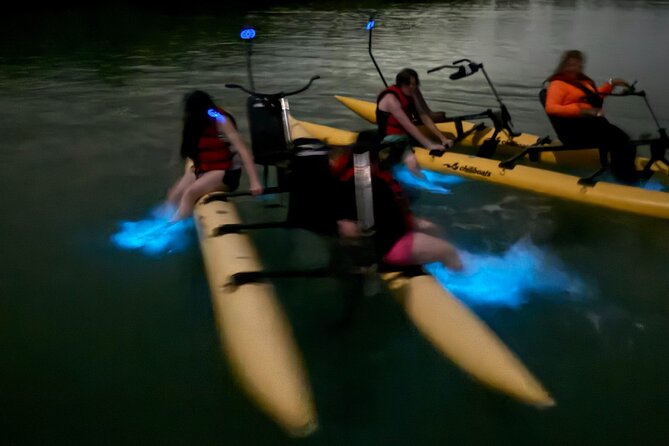
Every outing uses double Chiliboats. You sit on a stable, twin-hull waterbike and pedal rather than paddle. The broad design is one of the strongest reasons to choose this experience over a kayak. It gives you a steadier platform and may suit you if you are uneasy in a narrow boat or prone to motion sickness.
One person said a spouse who gets motion sick handled the Chiliboat well. That is not a medical guarantee, but it points to a real advantage: the boat’s stability can make the ride more comfortable than a rocking kayak.
The pedaling is described as easy and does not require much force, but easy does not mean effortless. You may pedal for about 25 minutes at a time before reaching the glowing area. A moderate fitness level is required. Stretch your legs before boarding, especially if you have knee, hip, or lower-leg pain.
Wear shorts or pants that you do not mind getting wet. Water can splash up from the wheels and from other boats. Water shoes are a smart choice, and a waterproof pouch will protect your phone. Leave valuables behind when possible.
A US Coast Guard-certified life jacket and whistle are included. Keep the life jacket properly fastened. Guides use whistles to keep the group together, which may sound a little formal at first, but it matters on dark water. You should not remove the jacket, collide with another boat, or jump into the bay.
The ride to Bahia Fosforescente
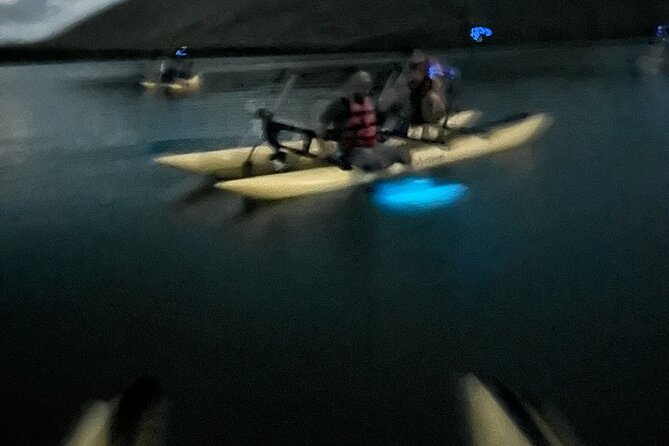
The tour’s main stop is Bahia Fosforescente, also called Phosphorescent Bay. The route begins with a steady nighttime ride across calm water toward the area where the organisms are easiest to see.
This first stretch is part transportation and part attraction. The pace is controlled, and you have time to settle into the unusual motion of pedaling a bike on water. Guides explain the bay, the organisms, and the environmental rules along the way. The quiet helps you notice the night sky and the sound of the water moving around the boat.
The route is not a race. You should not expect a high-speed thrill ride. That is good news if you want a peaceful outing, but it may feel slow if you are looking for an intense adventure. The guides’ whistles help maintain spacing and direction, particularly because this is a nighttime activity in an unfamiliar area.
The company limits the activity to a maximum of 20 people. That is large enough to create a group atmosphere, but small enough for guides to manage the route and safety procedures. In a bigger group, you may need patience while everyone boards and keeps pace.
More things to do in San Juan:
- San Juan Guided Snorkel With Turtles Tour and Videos
★ 5.0 · 12,947 reviews - Top Rated El Yunque Rainforest & Waterslide – SmallGroup Tour
★ 5.0 · 12,789 reviews - Night Kayak – Condado City Lights Tour
★ 4.5 · 4,807 reviews - Authentic Flavors of San Juan Food Tour
★ 5.0 · 4,741 reviews
Watching the water glow
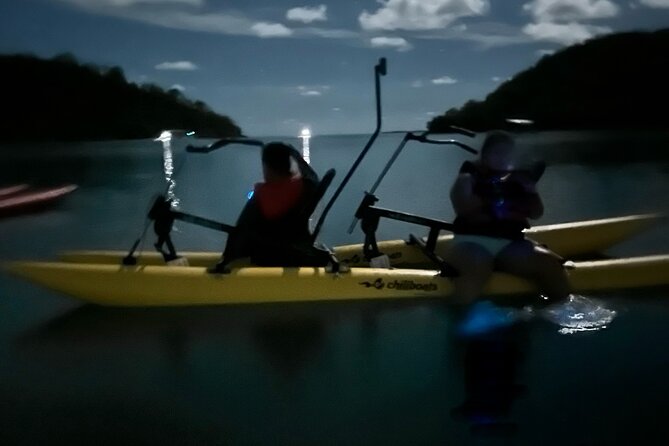
Once you reach the bay, the Chiliboat becomes a viewing platform. Your own movement creates the effect: the organisms light up when disturbed, producing flashes that seem to scatter beneath and around you.
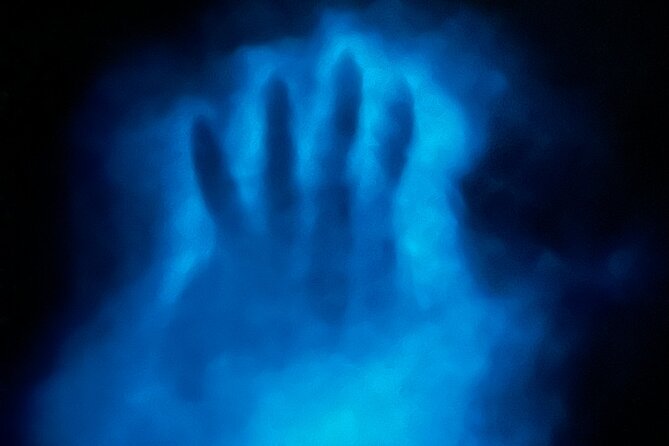
You may see tiny sparks rather than a solid blue glow. The best way to approach the experience is to watch how the light responds to motion. A hand stirring the water, a pedal turning, or a small splash can trigger a brief trail of light.
Past outings have included moments when people could scoop glowing water into their hands. The effect is fleeting, but it helps you understand that the light comes from living microscopic organisms in the water. Guides also explain the conditions that affect brightness, including moon phase and rain.
The tour does not permit swimming, following Department of Natural Resources rules. You should not expect to jump into the bay or handle the water freely. The restrictions protect the site and keep the activity within the rules for this sensitive natural area.
Do not judge the experience by online photos alone. The company says its own photographs are taken with an iPhone 14 Pro Max without filters, but night photography remains difficult. A phone may capture less than your eyes see. Guides can offer tips for photographing the glow, though you should treat any pictures as a bonus rather than the main reason to go.
How much bioluminescence should you expect?
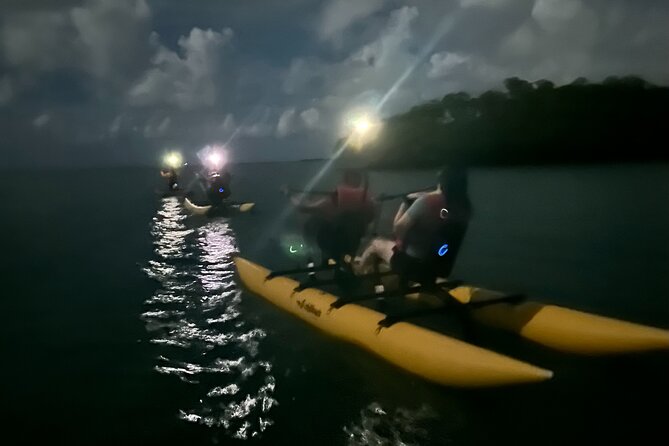
This is the most important point in the whole review. Bioluminescence changes from night to night. A bright moon can wash out the effect, while rain can carry sediment into the water and alter conditions. Tides, sunlight, clouds, and other weather factors also play a role.
Near the New Moon is usually the safest choice for darker conditions. One outing scheduled close to the New Moon had a clear sky, strong stars, and very visible bioluminescence. Another outing just after a third-quarter moon produced a more modest display.
That does not mean you should cancel a trip simply because the moon is not perfectly new. It means you should set fair expectations. The Chiliboat ride, the quiet bay, and the guide’s explanation still form the experience even if the glow is subdued.
Weather can also change the plan. Brief Caribbean showers are common, and tours may continue in light rain. The route leader decides at the meeting point whether conditions are safe. If poor weather cancels the activity, you can receive a full refund or choose another date.
Guide service and the eco-friendly approach
The guides receive some of the strongest praise connected with this activity. Mary and Waldie are specifically noted for helping first-time riders settle in and for keeping the mood calm when boarding initially feels awkward. Mariemma is also praised for professional, clear instruction.
The guide’s role is more than steering you to the bay. You receive basic science about dinoflagellates, an explanation of the conditions affecting the glow, and reminders about protecting the area. That makes the outing more meaningful than simply making a dark-water trip and hoping to see blue sparks.
I also value the firm rules. No swimming, no jumping, no alcohol, and no removing life jackets may sound strict, but they make sense in a natural reserve at night. The company presents the tour as an eco-friendly alternative to more intrusive ways of viewing the bay, and the guides emphasize respect for the ecosystem.
One poor account described a rushed feeling in a large group. The operator’s response stressed that whistles and firm safety instructions are used to control the pace. I would read this as a useful warning rather than a reason to avoid the outing: if you prefer a loose, independent ride, this is not that. If you want staff managing a nighttime group carefully, the structure should feel reassuring.
Who will enjoy this most?
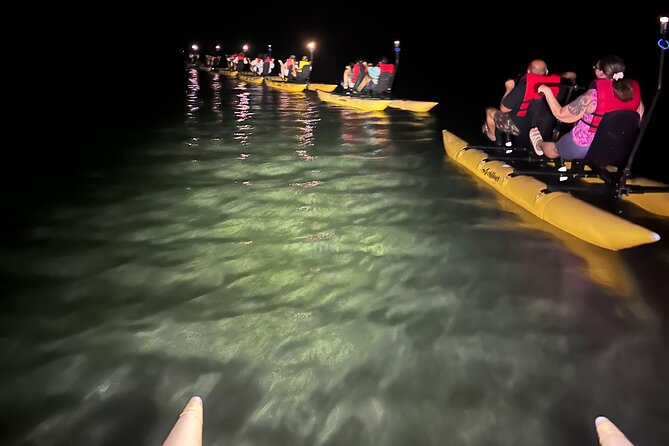
I would choose this tour for couples, families with older children, and anyone who wants a stable alternative to kayaking. It is also a good fit if you like learning a bit about the natural setting rather than simply taking pictures.
The minimum height information needs careful attention. One part of the tour information says 48 inches, while the additional rules list 54 inches, or 4 feet 6 inches, as the minimum. The stricter figure is the safer one to use when deciding if a child qualifies. The maximum height is listed as 6 feet 5 inches.
Weight limits are also strict. One rider cannot exceed 240 pounds according to the main information, while the additional rules say 250 pounds. Two people together cannot exceed 450 pounds. Because weight checks are conducted before departure and no refund is provided if someone exceeds the limit, contact the operator ahead of time if your group is close to any limit.
This is not a good choice for someone with claustrophobia, panic attacks, or a strong fear of darkness. It is also a poor match if you dislike wet clothing, cannot pedal for repeated stretches, or want to swim in the bay.
Is $79 a fair price?
At $79 per person, the value depends on what you want from a biobay outing. You are paying for the Chiliboat, safety equipment, guides in English and Spanish, instruction, and access to a way of reaching the bay without kayaking.
The price makes more sense if stability is important to you. A kayak tour may cost a similar amount, but the Chiliboat changes the physical challenge. You pedal at an easy pace, sit on a broad platform, and can focus more on the water and sky.
The cost looks less attractive if you are booking mainly for dramatic photographs. Since the glow varies, you could pay the full amount and see only a faint display. The company is clear about that risk, so the fair comparison is not $79 for a guaranteed light show. It is $79 for a guided nighttime nature outing with a chance to see one of Puerto Rico’s most unusual natural events.
Transportation is not included. You need to drive to Punta Papayo, making the true cost higher if you are based in San Juan. I would pair the excursion with time in southwestern Puerto Rico rather than drive two hours each way only for a 90-minute tour.
What to pack and how to plan the night
Keep your packing simple:
- Water shoes or footwear that can get wet
- Shorts or quick-drying pants
- Water
- A waterproof phone pouch
- Identification and the credit card used for booking
- Light clothing suitable for a warm, damp evening
Stretch before you arrive, and consider your physical limits honestly. You may not need much force to pedal, but the repeated motion can still tire your legs.
Check the moon phase before booking. The closer you are to the New Moon, the darker the sky is likely to be. Also remember that cloud cover can sometimes help block moonlight, but conditions remain outside anyone’s control.
The tour includes free cancellation up to 24 hours before the start time. Within 24 hours, the payment is not refunded. If bad weather forces cancellation, you are offered another date or a full refund.
Should you book the La Parguera Chiliboat tour?
I would book it if you want a calm, unusual way to see La Parguera’s bioluminescence and prefer a stable waterbike to a kayak. Choose a date near the New Moon, arrive early, and treat the glow as a natural possibility rather than a guaranteed spectacle.
I would skip it if you are making a long drive solely for postcard-bright water, cannot meet the height or weight rules, or dislike nighttime activities with firm safety controls. For the right person, the combination of easy pedaling, dark water, stars, and small flashes of living light makes the $79 worthwhile.
FAQ
How long does the Chiliboats bioluminescent bay tour last?
The stated duration is approximately 1 hour and 30 minutes. The experience includes the ride to Bahia Fosforescente, time viewing the bioluminescence, and the return to the same meeting point.
Where does the tour meet?
The meeting point is Caribbean Chiliboats Parguera at Punta Papayo, 1 9 Interior Final, La Parguera, Lajas 00667, Puerto Rico. The activity ends back at this location.
How early should I arrive?
You should arrive 30 minutes before the reserved departure time. This allows time for parking, check-in, safety procedures, and boarding. Arriving at or after the reserved time may be treated as a no-show without a refund.
Is the bioluminescence guaranteed to be bright?
No. Bioluminescence is a natural phenomenon, and brightness changes with moon phase, rain, sediment, tides, sunlight, and other environmental conditions. Dark nights close to the New Moon generally offer the best viewing conditions.
What are the height and weight limits?
The additional rules list a minimum height of 54 inches, or 4 feet 6 inches, and a maximum height of 6 feet 5 inches. The individual weight limit is listed as 240 to 250 pounds in the supplied information, and the combined limit for two people is 450 pounds. Because the published figures conflict slightly, confirm the exact limit with the operator before booking if you are close to it.
Can I swim in the bay?
No. Swimming is not permitted under Department of Natural Resources regulations. You must also keep your life jacket on and may not jump from the Chiliboat.
Just added in San Juan
- eFoil Lesson Old San Juan★ 5.0 · 5 reviews
- El Yunque Rainforest Party Tour with Waterslide and Rope Swinging★ 5.0 · 1 review
- Yoga and Sound Healing at the Beach!★ 5.0 · 1 review
- Private Windsurf Experience in Puerto Rico★ 5.0 · 7 reviews
- Window Cave and Indian Cave private tour with an archaeologist as guide★ 4.5 · 9 reviews
- “Exclusive Tour”: VIP Rum Tasting at San Juan Artisan Distillers★ 5.0 · 1 review
- West Coast Beer Tasting Adventure in Puerto Rico★ 5.0 · 2 reviews
- Western Island Full Day Tour★ 5.0 · 2 reviews
Bioluminescent Bay Kayaking, compared.
Two-in-One Day Trip: El Yunque and Bio Bay Tour with Transport
Read our review →
Hike El Yunque Rainforest and Kayak Bio Bay Combo Tour
Read our review →
La Parguera Bio Bay Boat Ride and Swimming w/ San Juan Transport
Read our review →Browse the lists this tour appears in