
Review · OLD SAN JUAN TOURS
Signs and Wonders in Old San Juan History Culture and Mysteries
Stories cling to these old walls. This two-hour Old San Juan walk mixes Spanish, Taino, and African influences with tales of miracles, pirates, inquisitions, and military conflict. I like the unusual blend of documented history and local legend, and I like that a certified local guide with a Master’s in Behavioral Sciences leads the way. The main consideration is pace: you cover about three miles, often in hot weather, and most stops are brief.
I also appreciate the small group limit of 15 people. That gives you a better chance to ask about the details that catch your eye, something one guest especially valued when the guide added sights and recommendations based on personal interests. The $65 price is fair if you want interpretation rather than a simple stroll, but remember that meals, transportation, and possible church donations are not included.
In This Review
- Key points to know before you go
- Why this Old San Juan walk feels different
- From Paseo La Princesa to the San Juan Gate
- Two old churches and a story of a falling rider
- Hotel El Convento and La Rogativa
- Fortresses, palaces, and one of America’s oldest houses
- El Morro and the hard business of defense
- San José Church and the cemetery beyond the wall
- Dominican roots, the Devil’s Sentry Box, and San Cristóbal
- Teatro Tapia and the final walk to Plaza Colón
- What $65 gets you
- Practical advice for the three-mile route
- Should you book Signs and Wonders in Old San Juan?
- FAQ
- How long does the tour last?
- How far do you walk?
- Where does the tour begin?
- Where does the tour end?
- Is admission to the churches included?
- Is the tour available in English?
Key points to know before you go
- Three miles in about two hours: Expect a brisk walk with short stops, not a slow museum visit.
- Sixteen history-filled locations: The route includes city gates, churches, forts, cemeteries, theaters, and plazas.
- Legends sit beside documented events: You will hear about miracles, apparitions, executions, sieges, and soldiers who vanished.
- A local guide shapes the experience: The guide is certified, Puerto Rican, and trained in Behavioral Sciences.
- Most sites are viewed from outside: Church entry depends on opening hours, and donations may be requested.
- The route ends at Plaza Colón: You finish near public transportation after beginning beside Paseo La Princesa.
Why this Old San Juan walk feels different
Many city walks stick to dates, governors, and military victories. This one adds the stories people repeat because they are strange, unsettling, or spiritually important. That makes the tour a good fit if you want to understand how Puerto Rico’s identity was shaped not only by colonial buildings, but also by faith, fear, resistance, and oral tradition.
The guide’s background in Behavioral Sciences may add a useful angle to stories about belief, collective memory, and the way legends survive. The tour is not presented as a ghost hunt. It is a cultural walk through places where religious devotion and local storytelling have influenced how people understand the city.
The format also keeps the group moving. With sixteen stops packed into roughly two hours, you will not spend long inside any one place. Think of this as a guided introduction to Old San Juan, with enough unusual material to help you decide where to return later.
More of Old San Juan:
- Old San Juan Walking Tour
★ 5.0 · 2,211 reviews - Old San Juan City Walking Tour
★ 5.0 · 1,718 reviews - Historic Old San Juan Sunset Walking Tour
★ 5.0 · 634 reviews
From Paseo La Princesa to the San Juan Gate
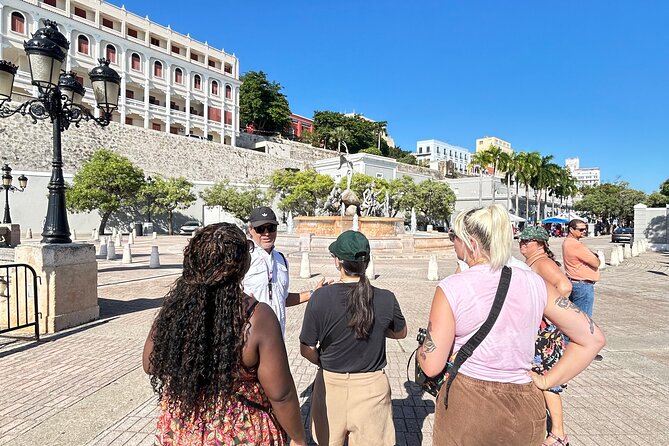
The meeting point is beside Paseo La Princesa, near Banco Popular at 206 Calle Tetuán. The first section follows the promenade toward the old city wall and passes the Spanish Prison, which once stood outside the fortified core.
Here, the guide discusses dungeons, torture, and the local revolutionary leader Albizu Campos, described in the tour material as a Harvard graduate. This opening gives you a clear sense of the tour’s range. It is not only about grand churches and colorful façades. It also addresses imprisonment, political struggle, and the harder parts of Puerto Rico’s past.
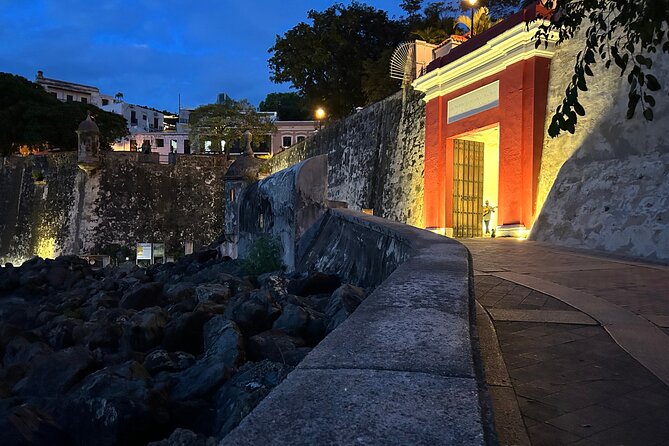
You then enter through La Puerta de San Juan, the red gate that once served as a controlled entrance to the city. The guide focuses on its width and on the practical thinking behind Spanish military planning. Old San Juan was not simply a settlement with handsome buildings. It was an operating base, protected by walls and positioned for defense.
The stop is short, only about five minutes, but the question about the gate’s width encourages you to notice the structure itself. You may otherwise walk through without considering who and what could pass through such an opening.
Two old churches and a story of a falling rider
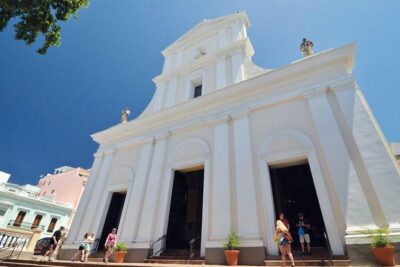
The Catedral Basilica Menor de San Juan Bautista comes next. The church dates to 1521 and is described as the second-oldest church in America. The visit centers on its age and the tomb of Juan Ponce de León.
Entry depends on whether the cathedral is open, and a donation may be required. That detail matters because the tour price does not guarantee admission. If you want to see the interior, keep your expectations flexible and dress appropriately for a religious site.
At Capilla del Santo Cristo de la Salud, the focus shifts to a place associated with miracles. Construction began in 1753, and the chapel was built above the city wall. The guide tells the story of the horse rider Baltasar Montañez, a tale that helps explain why this small site holds such weight in local belief.
This is one of the tour’s strongest pairings. The cathedral gives you formal religious history, while the chapel brings in popular devotion and a story tied to danger and rescue. Each stop is only about five minutes, so you should listen closely and save detailed photographs for later.
Hotel El Convento and La Rogativa
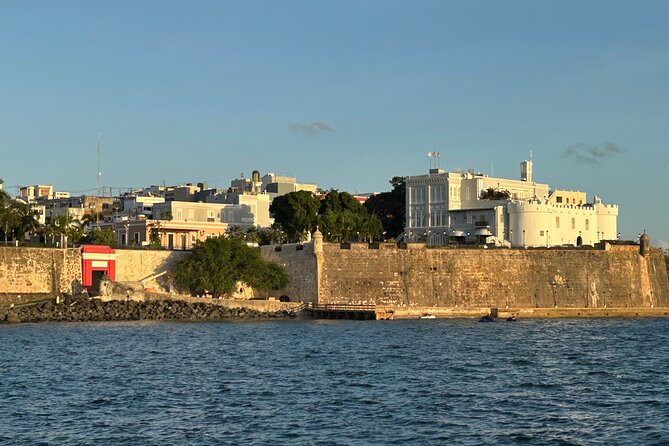
Hotel El Convento occupies a building constructed in 1646. It began as the island’s first convent, closed in 1903, and later became a hotel. The guide connects the site with stories told by people who have stayed there, including the tale of the widow Ana de Lansós.
You will not be taking a hotel tour, so the value here comes from the building’s changing purpose. A convent, then a closed religious institution, then a hotel: that sequence reflects how Old San Juan’s buildings have been reused across the centuries.
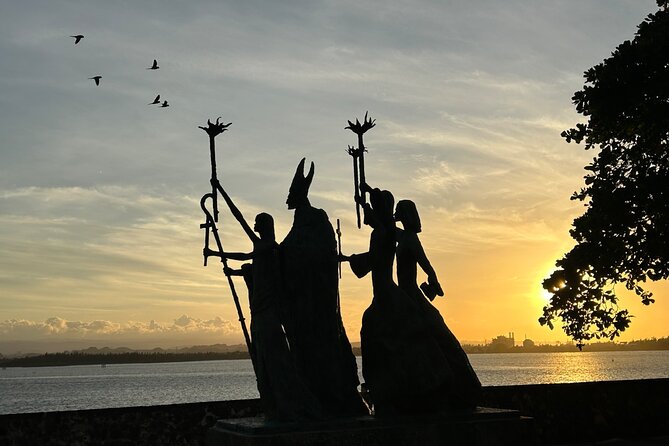
At La Rogativa, a sculpture marks one of the city’s most important public stories. The name refers to a religious procession, and the guide explains why the monument matters to many Puerto Ricans. Spanish and Creole resistance was not enough, according to the story. A miracle was needed.
This stop connects faith with civic identity. It is not just a statue to photograph. It represents a moment when religious action became part of the city’s memory of defense and survival. You get around ten minutes here, enough time to hear the story and look carefully at the figures.
More history tours in Puerto Rico:
- Historical San Juan Bay Sunset Sailing Tour
★ 4.5 · 710 reviews - Old San Juan Historical Walk, Shopping, and Dining w/ Transport
★ 4.5 · 381 reviews - Old San Juan Historical Walking Tour
★ 5.0 · 331 reviews - Discovering Puerto Rico: Lifestyle, Art, and Cultural Tour
★ 5.0 · 314 reviews
Fortresses, palaces, and one of America’s oldest houses
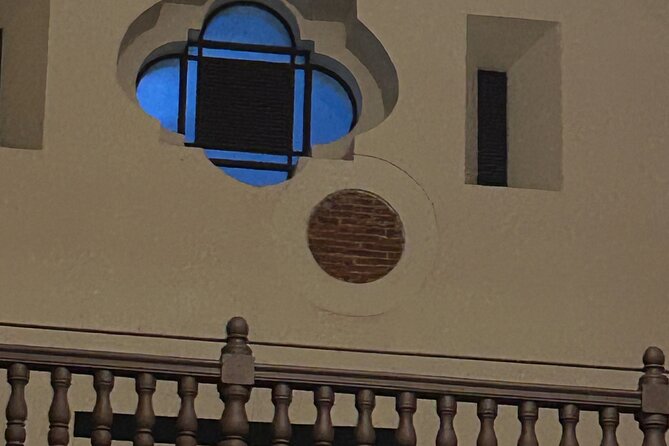
La Fortaleza and the Palacio de Santa Catalina provide a view of the first major fortification built to defend San Juan. The site began a long line of military works that protected the city against attack.
The stop is brief, about five minutes, and the emphasis is on purpose rather than an extended palace visit. You learn why the Spanish chose this location and how defense shaped the city’s growth.
The walk also passes one of the oldest houses in America, built in 1521 after the first settlements moved. The guide asks who lived there, turning an ordinary-looking house into a prompt to think about the people who first occupied the city.
Next comes the Escuela de Artes Plásticas y Diseño de Puerto Rico, located near the former Beneficence Asylum and Insular Asylum. Construction began in 1840, with the buildings intended for orphans, people with mental illness, and others in need. The guide also discusses a bomb incident connected with the site.
This portion adds social history to the military and religious themes. Old San Juan was not only a fortress and a colonial capital. It also had institutions for care, confinement, education, and public need.
El Morro and the hard business of defense
Castillo San Felipe del Morro is one of the route’s biggest visual rewards. Built beginning in 1539, the fort expanded and changed for more than 250 years. From here, you hear about executions, attacks, and sieges while taking in the broad view beyond the walls.
The walk does not include transportation or a separate admission ticket, and the itinerary describes a visit to the site rather than a full interior exploration. That distinction is important. If you want to spend time in every tunnel, ramp, and exhibit at El Morro, plan a separate visit.
Still, a short guided stop can give the fortress context. Without an explanation, the thick walls may look like a grand backdrop. With the military story, you can better understand why the fort took centuries to expand and why San Juan mattered to Spanish power in the Caribbean.
Expect another ten-minute stop. That is enough for the main story and views, but not enough for a detailed examination of the entire fort.
San José Church and the cemetery beyond the wall
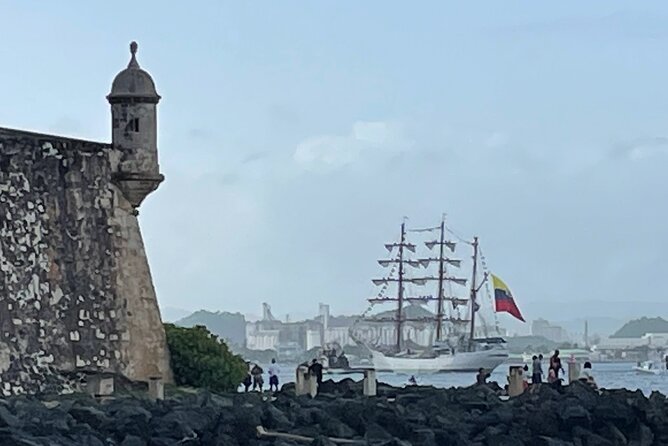
Iglesia de San José is identified as the third-oldest church in America, dating to 1532. The guide focuses on miracles and wondrous events connected with the church.
As with the cathedral, entry depends on opening hours, and a donation may be requested. You should treat both church stops as possible interiors, not guaranteed admissions. Even from outside, the buildings help show how early and strongly religious institutions shaped the city.
The route then reaches Cementerio Santa María Magdalena de Pazzis, outside the city wall. This cemetery is the resting place of many prominent Puerto Ricans. The guide also explains the local expression Pateco took that one, or Se lo llevó Pateco, a phrase tied to death.
That small language lesson is exactly the kind of detail that can make a walk feel local rather than textbook-like. The cemetery also changes the mood. After forts and churches, you are reminded that the city’s story is carried by the people buried there as much as by the buildings still standing.
Dominican roots, the Devil’s Sentry Box, and San Cristóbal
The Galería Nacional del Instituto de Cultura Puertorriqueña occupies a site founded in the 16th century by the Dominican order. Over time, it served as a refuge for friars, a school, and a military hospital. The guide also brings in a famous Puerto Rican figure connected with the building.
This stop is useful because it shows how one place can shift roles as the city changes. The route repeatedly returns to that idea: religious buildings become hotels, aid institutions become schools or art spaces, and military structures collect layers of legend.
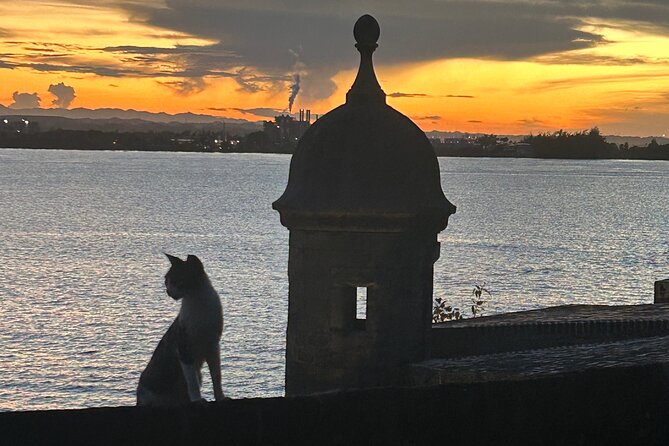
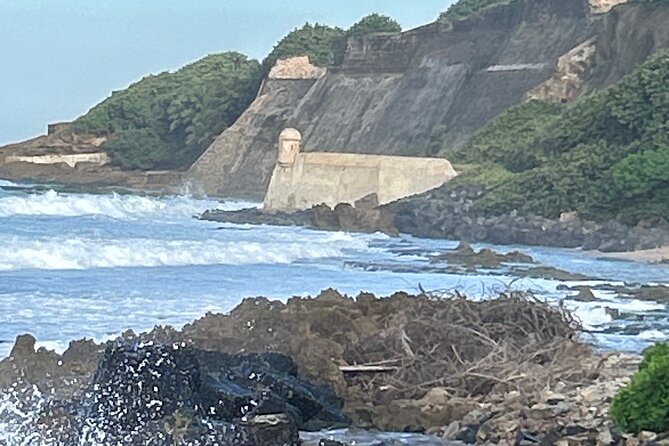
At Garita del Diablo, you see a sentry box built in 1634, one of the oldest military structures in Old San Juan. The name means Devil’s Sentry Box, and the guide explains legends about soldiers who disappeared, including the story of Private Sanchez.
The stop is only five minutes, so do not expect a long ghost story session. The appeal is the contrast between the small military lookout and the large legends attached to it. A simple guard post becomes a place where fear and imagination fill in what history cannot fully explain.
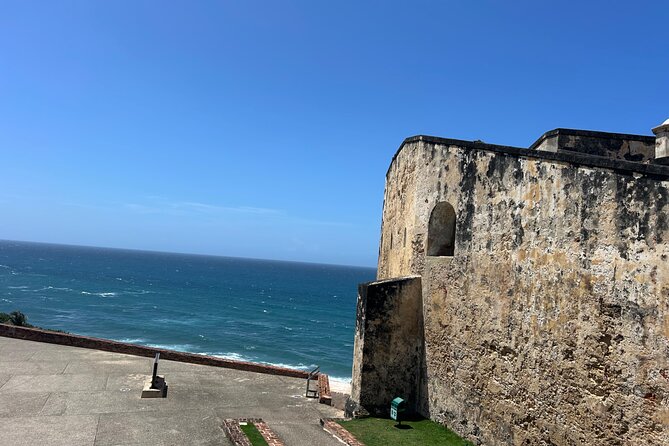
Castillo de San Cristóbal brings more military history, along with stories of executions, attacks, and supernatural events. The stop includes the sentry box and the main entrance overlooking the Atlantic Ocean. The guide also discusses the cistern and what happened to it.
Like El Morro, San Cristóbal deserves more time if you want to explore it fully. On this tour, you receive a strong introduction and a reason to return, rather than a complete fort visit.
Teatro Tapia and the final walk to Plaza Colón
Teatro Tapia, built in 1824, brings a different kind of mystery. The guide shares stories of a dead dancer’s apparition, screams associated with burned witches, and a human stampede that killed four children. The stop also includes a story tied to Three Kings Day.
The material here is darker than the usual theater history. If you prefer a strictly academic tour, some legends may feel less satisfying than the architectural and military facts. If you enjoy hearing how frightening stories become part of a city’s cultural memory, this is a memorable final chapter.
The tour ends at Plaza Colón, where you receive a closing account of Old San Juan’s history. The summary includes the destruction of a gate, the construction of the Casino de Puerto Rico, and the first school built by the United States outside the mainland.
Finishing in a public plaza is practical. You can continue exploring, find food, or use nearby public transportation. Since no transportation or meal is included, plan your next step before the tour ends.
What $65 gets you
At $65 per person, the price makes sense if you want a guide to connect sixteen sites into one story. You are paying for local interpretation, not admission to a series of attractions. Most stops are outside, and the tour includes no meals or transportation.
The small maximum of 15 people improves the value. A guide can respond to questions and, as the experience’s strongest feedback indicates, may add sights or recommendations that match your interests. That personal flexibility is more useful than simply hearing a prepared speech.
The price is less attractive if you want long visits inside El Morro, San Cristóbal, the cathedral, or San José Church. In that case, use this walk to get oriented, then return independently with more time.
Practical advice for the three-mile route
Wear comfortable walking shoes. The route covers about three miles, and the local weather is hot, so light, comfortable clothing is sensible.
This is an adults-only activity, with no availability for special accommodation. You should have a moderate level of physical fitness and be ready to walk long distances. Service animals are allowed, and the route is near public transportation.
The tour is offered in English and Spanish. Bring water and keep your camera ready, but do not let photography distract you from the short explanations. A phone ticket is accepted, and confirmation arrives at booking.
Free cancellation is available if you cancel at least 24 hours before the start time. Cancellations or changes made within 24 hours are not refunded or accepted.
Should you book Signs and Wonders in Old San Juan?
Book it if you want a brisk, story-driven introduction to Old San Juan, especially if miracles, local legends, religious sites, and military history interest you. It is also a good first-day choice because the route ends near Plaza Colón, leaving you well placed to continue on your own.
Skip it if you want a slow architectural tour, guaranteed church entry, or enough time to explore both major forts indoors. For the right audience, the best feature is the guide’s ability to connect famous landmarks with less familiar stories, including the widow Ana de Lansós, Private Sanchez, Baltasar Montañez, and the phrase Pateco took that one. At $65, that human context makes the walk worthwhile.
FAQ
How long does the tour last?
The tour lasts approximately two hours.
How far do you walk?
You should be fit for a walk of about three miles.
Where does the tour begin?
It begins beside Paseo La Princesa at Banco Popular, 206 C. Tetuán, San Juan.
Where does the tour end?
The tour ends at Plaza Colón on Calle de la Fortaleza.
Is admission to the churches included?
Church entry depends on opening hours. A donation may be required at the Catedral Basilica Menor de San Juan Bautista and Iglesia de San José, and donations are not included.
Is the tour available in English?
Yes. The local guide offers the tour in English and Spanish.
Just added in Puerto Rico
- Clear Bottom Kayaking and Snorkel Reef Exploration★ 5.0 · 1 review
- CLEAR BOTTOM KAYAKS Tour in Bioluminescent, Mosquito Bay★ 4.0 · 30 reviews
- Full Clear Kayak Bioluminescent Experience Vieques, Puerto Rico★ 5.0 · 1 review
- Isla de Vieques Beach Hopper Sightseeing Tour★ 3.0 · 2 reviews
- eFoil Lesson Old San Juan★ 5.0 · 5 reviews
- Private Tour of the White Canyon Ancestral Route in Utuado★ 5.0 · 7 reviews
- El Yunque Rainforest Party Tour with Waterslide and Rope Swinging★ 5.0 · 1 review
- Yoga and Sound Healing at the Beach!★ 5.0 · 1 review
Old San Juan Tours, compared.


Old San Juan Bar Crawl: Experience Local Hotspots
Read our review →
Savor the Sunset: Old San Juan Walking Food Tour
Read our review →

Browse the lists this tour appears in